Quick answer: A useful sump pump quote should identify the pump and controls, basin and lid, discharge piping and destination, electrical work, alarms, backup equipment, testing, restoration and exclusions. Ask whether the price covers a pump replacement or a complete drainage-and-pumping system. Compare written scopes—not just pump horsepower or the total price.
This guide is for U.S. homeowners. The discharge example uses Madison, Wisconsin; those requirements should not be treated as rules for another community. No prices are provided because the equipment, existing conditions and permitted discharge route have not been established.
1. Define the problem and the boundaries of the work
Start with one question: “What water will this system collect, and how will that water reach the basin?”
A pump removes water delivered to its pit. Madison’s engineering guidance describes a typical system as perimeter drains feeding a sump basin, with a pump lifting the collected water outside. That makes the collection system and the pumping equipment separate parts of the proposal. A pump-only replacement should not be mistaken for new perimeter drainage. (cityofmadison.com)
Ask the contractor to label the project:
- Replacement: Reuse the existing basin, drainage connections and some or all discharge piping.
- System upgrade: Add or change controls, backup equipment, alarms or discharge routing.
- New installation: Create the basin and specify the drainage connections and discharge system.
Then request a plain-language statement of what the work does not address. Does the proposal include investigating water entry, correcting exterior drainage or repairing existing drains? If not, keep those items outside any promised outcome.
Get multiple written estimates. The Federal Trade Commission recommends that estimates describe the work, materials, completion date and price, and cautions against automatically choosing the lowest bidder. (consumer.ftc.gov)

2. Identify the pump, basin and controls—not just horsepower
Ask for the manufacturer and exact model of every pump and controller. Request the proposed basin dimensions, lid type and whether each component is new or reused.
Pump selection involves more than motor horsepower. Zoeller’s technical guidance identifies total dynamic head—the resistance the pump works against in the piping—and warns against undersizing the basin. Its published performance tables also show that a pump’s flow changes with head. (zoellerpumps.com)
You do not need to design the system yourself. Ask the installer to document:
- The expected water inflow and how it was assessed.
- The proposed discharge route.
- The pump’s expected output at the installation’s stated head.
- Why the basin and controls suit that operating condition.
- Whether there is room for both pumps, if backup pumping is included.
For the physical scope, ask: Is the existing basin acceptable? Is its replacement included if it is not? Will the lid remain removable? What fittings allow future pump removal?
Common mistake: Comparing one proposal’s maximum advertised flow with another proposal’s flow at a specified head. Ask both bidders for performance at the same proposed site conditions before treating the figures as comparable. (zoellerpumps.com)

3. Separate electrical work, alarms and remote notifications
Do not accept “connect to existing power” without clarification. Ask a qualified electrical professional to determine whether the existing supply is appropriate for the selected equipment and applicable local requirements.
Have the quote state who provides any required circuit, receptacle, wiring, permits and inspection. Also ask whether the primary pump, backup charger and alarm have different power requirements. Manufacturer instructions are model-specific; a backup controller is not simply an interchangeable accessory. (zoellerpumps.com)
Keep three questions separate:
- Will the pump operate?
- Will an alarm detect a problem?
- Will anyone receive the warning?
Request an alarm schedule identifying which conditions are monitored: high water, loss of AC power, low battery, pump operation or equipment fault. For example, Zoeller’s AquaNot FIT documentation distinguishes several of these conditions rather than treating them as one generic alarm. (zoellerpumps.com)
For remote notifications, ask what happens if household electricity or internet service fails. Request a demonstration of the actual notification path, including any subscription, account or network equipment requirements.
An audible alarm may suit someone at home; an absent homeowner should ask how a warning reaches a person who can respond.
4. Specify what “backup” actually means
Have the contractor describe the backup architecture, not merely add “battery backup included.”
Battery-powered secondary pump. Ask for the pump, controller, charger, battery model, battery capacity and enclosure. Require the bidder to state whether the battery itself is included. Ask for backup pumping capacity at the proposed head and the assumptions behind any runtime claim. Zoeller’s documentation ties battery operation to specified batteries and operating conditions; its primary and backup pumps also have different performance figures. (zoellerpumps.com)
Backup power for the primary pump. Ask what happens if the pump or its switch fails while electricity remains available. Request a clear list of the failures the proposed arrangement addresses—and those it does not.
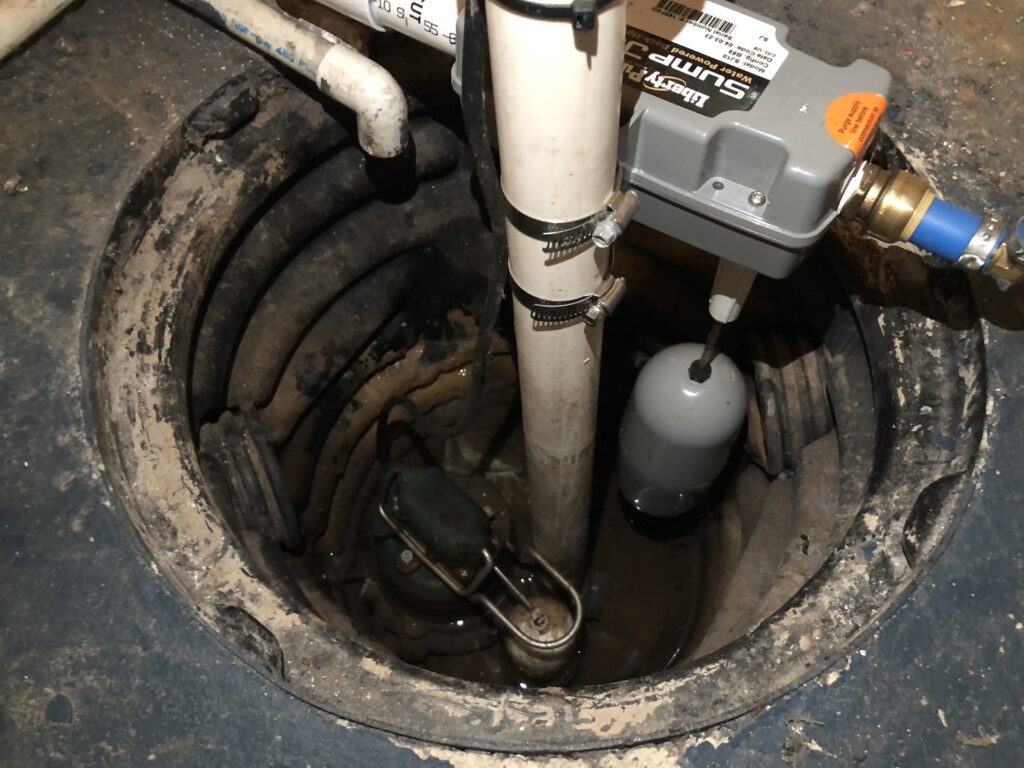
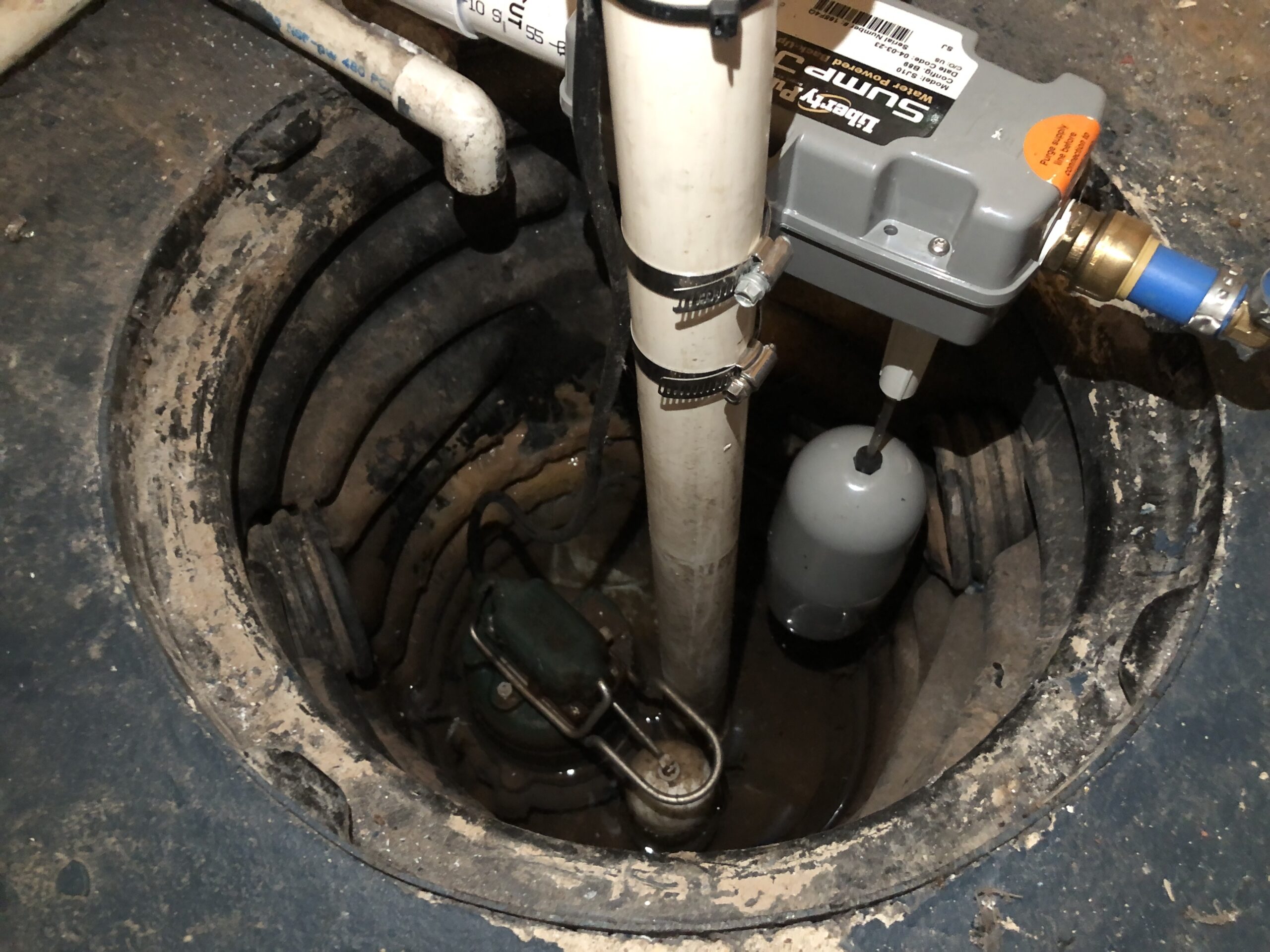
Water-powered secondary pump. Verify suitability with the installer and local water authority. Liberty Pumps’ SumpJet instructions specify municipal water service, relate performance to pressure and lift, and require appropriate additional backflow protection under local requirements. This model also requires discharge separate from the primary pump. Water-powered backup consumes supply water, so ask about operating water use as well as installation costs. These are product-specific considerations, not a universal approval for every water-powered system. (libertypumps.com)
Whatever the option, ask whether both pumps depend on any common discharge section. Have the installer explain the consequences of a blockage there.
5. Follow the discharge pipe to its approved destination
“Discharge to exterior” is not a complete scope. Request a route sketch showing the building exit, pipe route, termination point and any connection to public infrastructure.
Madison, Wisconsin example: The city prohibits sump connections to the sanitary sewer. Its residential guidance allows discharge to a nearby city storm sewer but requires an Excavation in the Right-of-Way Permit before making that connection. An existing nearby drain is therefore not permission to connect without further checks. (cityofmadison.com)
Madison also warns that sump discharge can create slippery or icy sidewalks. Its property guidance says the discharge cannot extend to the property line and asks owners to minimize effects on neighboring properties. (cityofmadison.com)
For a property elsewhere, ask the relevant building, plumbing, stormwater or sewer authority to confirm the proposed destination. Request written clarification of:
- Who obtains approvals and pays the fees.
- Whether trenching or work under paving is included.
- How the installer addresses freezing and outlet blockage.
- How the route avoids sending water back toward the foundation.
- Who restores disturbed soil, landscaping and pavement.
Common mistake: Treating reuse of the old discharge as proof that its destination is acceptable. Ask the bidder to identify and verify it.
6. Use this annotated hypothetical quote to find omissions
The following is an invented scope-review exercise, not a contractor offer, installed design or price benchmark. It deliberately contains no equipment sizing or prices.
| Hypothetical quote line | What to clarify before accepting |
|---|---|
| “Replace existing sump pump” | Identify the exact pump and control models; state whether removal and disposal are included. |
| “Reuse existing basin and cover” | Record their condition and suitability. State how an unexpected need for replacement would be priced and authorized. |
| “Reconnect existing discharge” | Identify pipe size, route, destination and reused components. Confirm whether the destination has been checked. |
| “Battery backup package” | List the secondary pump, controller, charger, battery and enclosure separately. State performance and runtime assumptions. |
| “High-water alarm” | Identify power source, monitored conditions and whether notification is local, remote or both. |
| “Electrical by others” | Identify who hires the electrician and coordinates completion. Obtain that scope before comparing totals. |
| “Patch concrete” | Define the patch area and finish; say whether flooring, trim and painting are excluded. |
| “Test system on completion” | Specify primary-pump, backup, alarm and discharge checks, plus written handover records. |
Worked comparison: Suppose Proposal A includes only the replacement pump and reconnection. Proposal B includes a battery, secondary pump, alarm and a new discharge route. The totals do not represent equivalent work.
Ask both bidders to price the same base scope, with optional upgrades separated. If an item remains an allowance or exclusion, mark it as unresolved rather than assigning your own assumed price. This applies the FTC’s advice to compare written descriptions and ask why estimates differ. (consumer.ftc.gov)
7. Complete a power-outage plan before installation
Ask the installer to walk through this checklist with you:
- Which equipment operates when utility power fails?
- Does backup pumping begin automatically?
- What happens if the primary pump or switch fails?
- What pumping capacity is available in backup mode?
- What conditions support the stated battery runtime?
- How will someone receive and respond to an alarm?
- What happens if the discharge outlet is blocked?
- Who provides service during an extended outage?
- How is normal operation confirmed after power returns?
Treat “hours of backup” as a conditional claim. Request the battery specification, pumping conditions and assumed operating pattern in writing. Zoeller’s AquaNot FIT manual expressly notes that actual runtime varies with head, incoming water volume and battery condition. (zoellerpumps.com)
If a generator is part of the plan, have a qualified electrical professional specify the safe connection arrangement. Never operate a fuel-burning generator indoors or in a garage. CDC guidance calls for outdoor operation at least 20 feet from doors, windows and vents, along with a battery-operated carbon monoxide detector in the home. (cdc.gov)
Do not improvise electrical connections during flooding or an outage.
8. Require accessible maintenance and a documented handover
Before signing, ask the contractor to demonstrate how a service technician will reach the lid, controls, pumps, valves and battery without removing permanent finishes.
Request a handover package containing:
- Equipment model and serial numbers.
- Manuals and the actual discharge route.
- Required permit and inspection records.
- Commissioning and alarm-test results.
- Model-specific maintenance and testing instructions.
- Battery inspection and replacement guidance.
- Separate equipment and workmanship warranty terms.
- Service contact information and callout charges.
Maintenance intervals are not universal. For example, Zoeller’s AquaNot FIT manual calls for system inspection and testing at least every three months, with additional provisions for certain battery types. Use the schedule for the installed equipment rather than a generic annual reminder. (zoellerpumps.com)
Finally, settle exclusions and payment stages in the written agreement. The FTC advises checking licensing and insurance, obtaining written contract terms and avoiding full payment upfront. (consumer.ftc.gov)
Your final check: Can you explain what collects the water, what pumps it, where it goes, what happens during failure and who maintains it? If any answer is missing, ask for a revised written scope before accepting the quote.