Quick answer: A basement that becomes wet after rain needs a moisture investigation—not an automatic prescription for waterproofing. Rainwater, groundwater, leaking pipes and condensation require different responses, and more than one can contribute. Before buying a repair, ask the evaluator to explain the suspected source, entry route, supporting evidence and remaining uncertainty. University of Minnesota Extension recommends understanding the source and movement of moisture before choosing a solution. (extension.umn.edu)
This guide is for U.S. homeowners preparing for an evaluation or comparing repair proposals. Use the questions below to organize observations, not to diagnose structural problems or design drainage work.
1. Check for hazards before investigating
Do not enter standing water to inspect a wall, reach a breaker or operate equipment. CDC warns against switching power on or off, or using electrical tools or appliances, while standing in water. After flooding, electrical safety may need professional assessment before powered cleanup begins. Contact your electric utility or a qualified electrician rather than approaching potentially energized water. (cdc.gov)
Keep away from suspected sewage. EPA recommends an experienced professional when sewage or other contaminated water has caused water or mold damage. Contact a plumber or sewer utility about the backup and a qualified cleanup provider about contamination. (epa.gov)
After a flood or disaster, obvious damage to walls or foundations also warrants a professional safety inspection before entry. Do not approach a damaged area to measure it. (cdc.gov)
For an accessible, nonhazardous damp area, take photographs promptly—but do not postpone drying just to collect a longer record. EPA recommends drying wet materials within 24–48 hours in most circumstances to help prevent mold growth. That is a response goal, not permission to leave materials wet for two days. (epa.gov)
2. Ask when the wetness starts—and what else was happening
Replace “it happens when it rains” with a more precise account:
- Was the surface dry before the storm?
- Did wetness appear during rainfall, overnight or the following day?
- Had several wet days preceded the event?
- Did the problem also occur during dry weather?
- Were the washer, shower, air conditioner or other equipment operating?
- Were basement windows open?
Treat timing as a clue, not a verdict. Rain can supply surface runoff, while groundwater levels can also change with flooding or seasonal site conditions. A rain-related pattern alone does not distinguish those pathways. (extension.umn.edu)
Ask the evaluator:
“Which possible sources fit this timing, and what observation or test would help distinguish them?”
Include dry observations in your record. “Same wall checked after another storm; no visible wetness” is more useful than recording only the worst event. Describe rainfall as observed or identify the weather station used; do not present a distant station’s measurement as an exact measurement at your house.
3. Map the first wet location, not just the puddle
Make a simple basement sketch. Label walls by compass direction or an unmistakable feature, such as “driveway wall.” Mark where you first noticed moisture and where you later found standing water.
Ask the evaluator to distinguish among:
- Moisture at a window or other opening.
- A localized wet wall area.
- Dampness along the wall-floor junction.
- A wet patch beneath plumbing or equipment.
- Droplets on exposed pipes or other cold surfaces.
- Broad floor dampness without an observed starting point.
These are observation categories, not diagnoses. EPA identifies both leaking and condensing pipes as potential moisture problems, along with landscaping, gutters and downspouts that direct water toward buildings. (epa.gov)
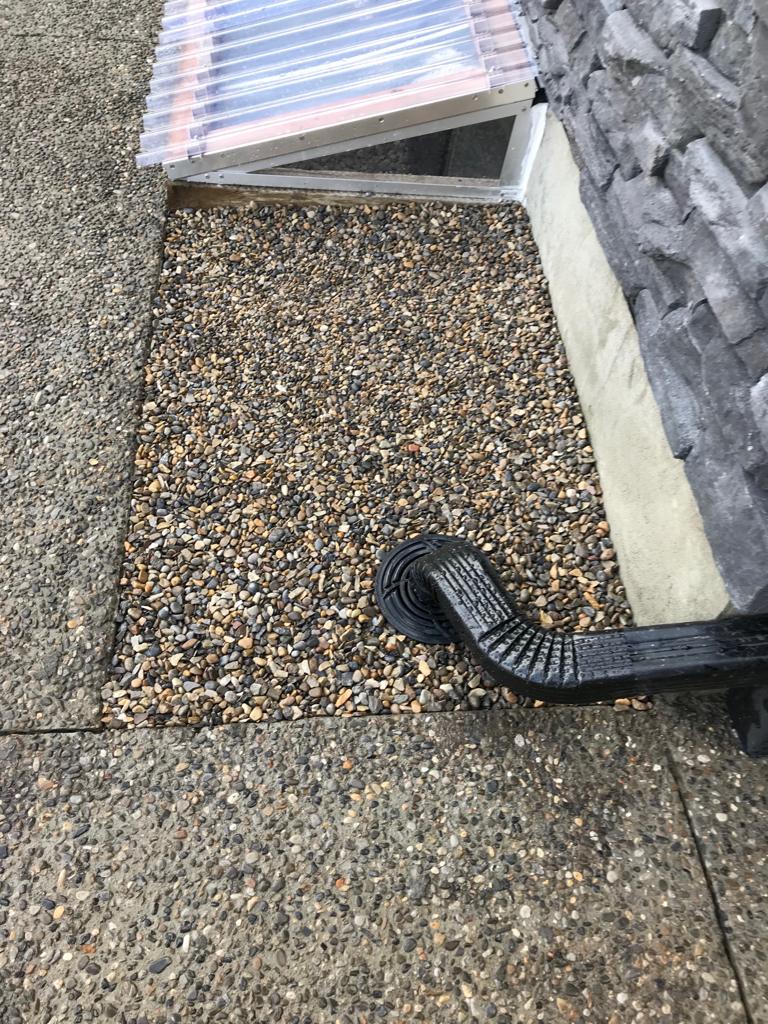
From safe ground-level access, photograph nearby downspout outlets, visible pooling and window wells. University of Minnesota Extension identifies surface drainage and window-well conditions among possible contributors to basement moisture. (extension.umn.edu)
Do not remove finishes to improve the map. Ask instead:
“Can you identify the likely entry area from what is accessible? If not, what further investigation do you recommend, and why?”
4. Check humidity before assuming every wet surface is leaking
Condensation forms when warm, humid air contacts a sufficiently cold surface. A pipe or wall can therefore become wet without liquid water leaking through it. EPA specifically recognizes condensation on pipes and other cold surfaces as a moisture concern. (epa.gov)
Record indoor temperature and relative humidity with a household humidity meter. Note its location and whether air conditioning or a dehumidifier was running. EPA recommends keeping indoor relative humidity below 60%, ideally between 30% and 50% where possible. These are moisture-control targets—not proof that a foundation is watertight. (epa.gov)
Ask:
- “Does the wetness pattern fit condensation?”
- “Have you considered both air humidity and surface temperature?”
- “Could equipment condensate drainage be contributing?”
- “Could liquid-water entry and condensation coexist?”
Avoid automatically opening basement windows to “dry everything out.” University of Minnesota Extension warns that warm, humid outdoor air can condense on cool basement walls and floors. (extension.umn.edu)
EPA includes dehumidifiers among humidity-control tools. Ask what a proposed unit would accomplish—and what separate investigation remains necessary for visible liquid-water entry. (epa.gov)
5. Ask whether plumbing needs a separate investigation
If wetness occurs in dry weather, follows fixture use or appears beneath plumbing, include a plumber in the investigation rather than asking only for waterproofing proposals. EPA recognizes leaking pipes and poorly draining air-conditioning condensate pans as possible moisture sources. (epa.gov)
For a safely accessible water meter, EPA WaterSense suggests comparing readings across a two-hour period when no water is being used. A changed reading suggests a leak. Account for automatic water use before interpreting the result, and follow your utility’s instructions for your meter. Do not enter a flooded area or open an unsafe meter enclosure. (epa.gov)
Philadelphia Water Department similarly explains that movement of a meter’s leak indicator means water is flowing through the meter. Meter designs differ; its blue-dial illustration is not universal. (water.phila.gov)
A meter check does not locate the leak. It also should not be treated as clearance for every plumbing possibility: it observes incoming metered water, not the condition of every drain or equipment discharge. Ask a plumber what the result establishes and what it leaves unresolved. This is a limitation inferred from what the meter measures. (water.phila.gov)
6. Use contrasting moisture logs to guide the next question
The following logs are hypothetical teaching examples, not inspections, measured case studies or repair recommendations.
| Observation | Home A | Home B |
|---|---|---|
| Before the event | Basement visibly dry | Floor visibly dry; basement windows open |
| Weather | Rain overnight after several wet days | Hot, humid afternoon without rain |
| First visible wetness | Narrow wet area at the driveway-side wall-floor junction | Droplets on exposed cold-water pipes |
| Other notes | Water visibly pooling near an exterior downspout outlet | Nearby wall has no observed trickle |
| Missing information | Exterior drainage route and below-ground conditions | Humidity trend and pipe surface temperature |
Working through Home A: Ask for an exterior drainage assessment and an explanation of whether surface water, subsurface water or both could fit the observations. The pooling is relevant evidence, but the log alone does not establish the underground entry route. Extension guidance recognizes both rainwater and groundwater as sources. (extension.umn.edu)
Working through Home B: Ask the evaluator to investigate condensation while checking that the pipes are not leaking. EPA identifies both mechanisms; droplets alone do not choose between them. (epa.gov)
For your own log, add dates, times, photographs, equipment operation and subsequent observations. Finish each entry with two separate lines:
- Observed: “Water first noticed beside the east wall at 8 a.m.”
- Not established: “Whether it entered at the wall, floor or a concealed location.”
That separation keeps assumptions from becoming the basis of a repair contract.
7. Understand what a visual inspection can—and cannot—establish
A dry inspection day should prompt questions about scope, not an automatic conclusion that nothing is wrong.
ASHI’s published Standard of Practice describes inspections of readily accessible, visually observable components and reporting conditions at the time of inspection. Its minimum scope does not require inspectors to determine repair methods, materials or costs. A standard home inspection is therefore not automatically a specialized moisture investigation or repair design. (homeinspector.org)
Ask prospective evaluators:
- What areas and systems will you examine?
- Will you review my moisture log and photographs?
- What measurements or tests are included?
- What will remain concealed or untested?
- Will the report separate observations from suspected causes?
- When would you recommend a plumber, HVAC specialist or structural engineer?
Concealed conditions matter: EPA notes that moisture and mold can occur behind drywall, under carpet and around hidden pipes. Do not interpret a clean-looking exposed surface as a complete assessment of concealed materials. (epa.gov)
8. Compare the proposed explanation before comparing the price
Give each bidder the same photographs, log and description. Request a written response to five questions:
- What source are you addressing? Rainwater, groundwater, plumbing, condensation—or an unresolved combination?
- What evidence supports that conclusion?
- What exactly will the work do? Ask whether it redirects exterior water, collects water, limits entry or manages indoor humidity.
- What is excluded? Request clear boundaries for plumbing, electrical work, finishes, restoration and further investigation.
- How will completion be checked? Ask what follow-up observations and maintenance the proposal requires.
Avoid these common decision errors:
- Accepting “hydrostatic pressure” or another label without asking for supporting evidence.
- Treating every wet basement as a structural failure.
- Assuming one dry visit disproves a recurring problem.
- Comparing lump-sum prices for differently defined work.
- Covering damp areas before the source and drying needs are addressed.
Extension guidance distinguishes moisture problems from structural soundness and emphasizes controlling the source. EPA likewise advises correcting moisture problems before basement remodeling. (extension.umn.edu)
Before signing, ask for one plain-language summary: “Here is what we observed, what we think causes it, what remains uncertain and how this scope addresses it.” Use that explanation—not the product name alone—as the starting point for comparing proposals.